
The Fish We Are Trying Not to Lose
Hucho hucho is native only to the Danube basin, and it is listed as Endangered on the IUCN Red List. Across most of its historical range it is gone or barely hanging on. In the Balkans, it is not — and that is not an accident.
What Went Wrong
Huchen need three things: cold, clean water; long unbroken stretches of river to move through; and clean gravel to spawn on. Twentieth-century Europe took all three away from most of the Danube basin.
Dams are the worst of it. A huchen river cut into segments is not a huchen river anymore — fish cannot reach spawning gravel, populations get isolated, and genetic diversity drains out of them over a few decades. Small hydropower plants have been the specific problem in the Balkans: individually minor, collectively devastating, and built on exactly the headwater tributaries huchen depend on to spawn.
Then there is gravel extraction, which destroys spawning beds outright; untreated municipal and industrial discharge; and poaching, which hits huchen harder than most species because a single big fish is worth taking and the spawning fish are the easiest to find.
What Has Changed
The last few years have gone the other way, particularly in Bosnia and Herzegovina and in Montenegro.
Local angling associations and river-protection campaigns have blocked or reversed a number of small hydropower projects. Enforcement against poaching during the spawning season has become more serious in several catchments. Catch-and-release has gone from a foreign idea to the default expectation among local anglers on huchen water — which matters more than any regulation, because it is applied every single day by the people actually standing in the river.
How We Guide
Our rules on huchen are not negotiable, and they apply to every client on every trip:
- One hundred percent catch and release. No exceptions, on any water, at any size. If you want to keep a huchen, we are the wrong outfit.
- Barbless hooks only. We will check, and we carry pliers.
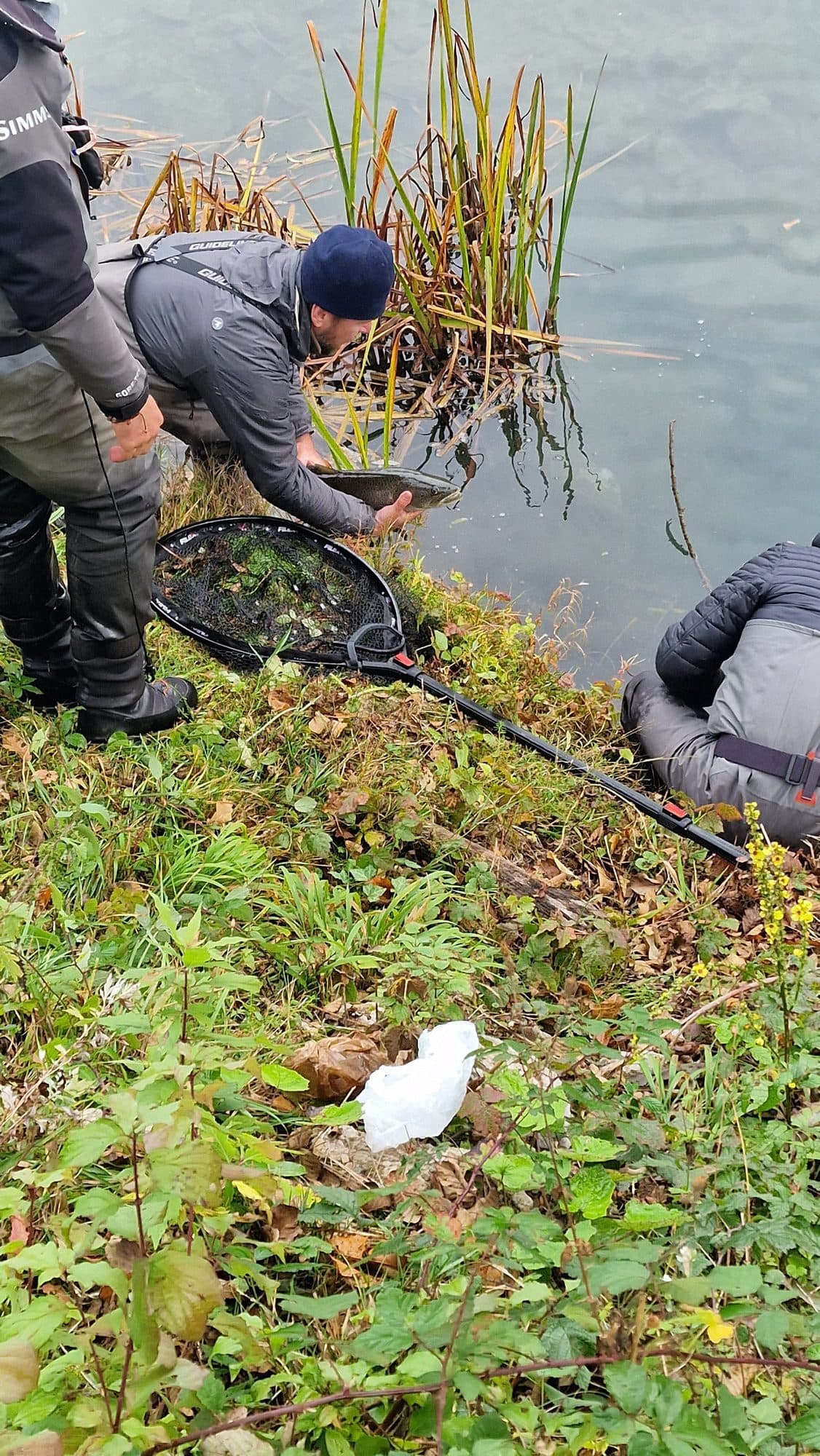
- The fish does not leave the water. Photograph it in the net or half in the river. We will take a better picture that way anyway.
- Short fights, heavy tackle. We rig heavier than you might expect on purpose — a fish landed in three minutes swims away, and a fish played for twenty often does not.
- Wet hands, no gills, no vertical holds. A huchen over a metre is too heavy to hold by the jaw without doing internal damage.
- No fishing over spawners. When fish are on the gravel we move, or we go home.
Come and See It
The best argument for protecting a river is standing in it. Every angler who travels here for huchen makes the fish worth more alive than dead to the people who live on these rivers — which, in the end, is the only conservation argument that has ever really worked.
See Our Trips